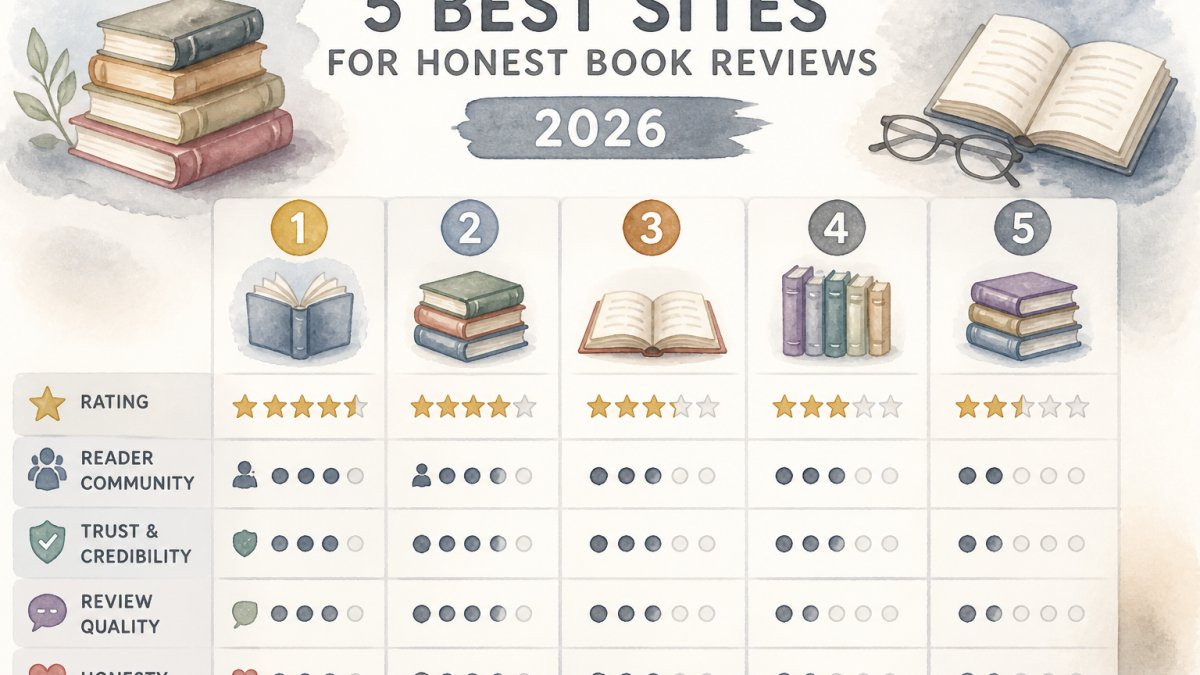
Table of Contents
- What Makes an Honest Book Review Site Worth Your Time
- Goodreads Alternatives for Book Reviews
- Using a Book Review Aggregator to Find Consensus
- How to Get More Reviews for My Book Through Trusted Channels
- Trusted Book Review Websites: Genre-Specific Hubs
- How to Identify Trustworthy Literary Criticism
- Conclusion: Building Your Book Discovery Strategy
- Frequently Asked Questions
Last Updated: October 7, 2026
What Makes an Honest Book Review Site Worth Your Time
Finding genuine book reviews has become harder than ever. Between fake endorsements, AI-generated opinions, and review platforms flooded with bot activity, readers and authors alike struggle to separate authentic feedback from marketing noise. The truth is simple: not all review sites are created equal, and knowing which ones prioritize honest book reviews can change how you discover your next great read or build credibility for your work.
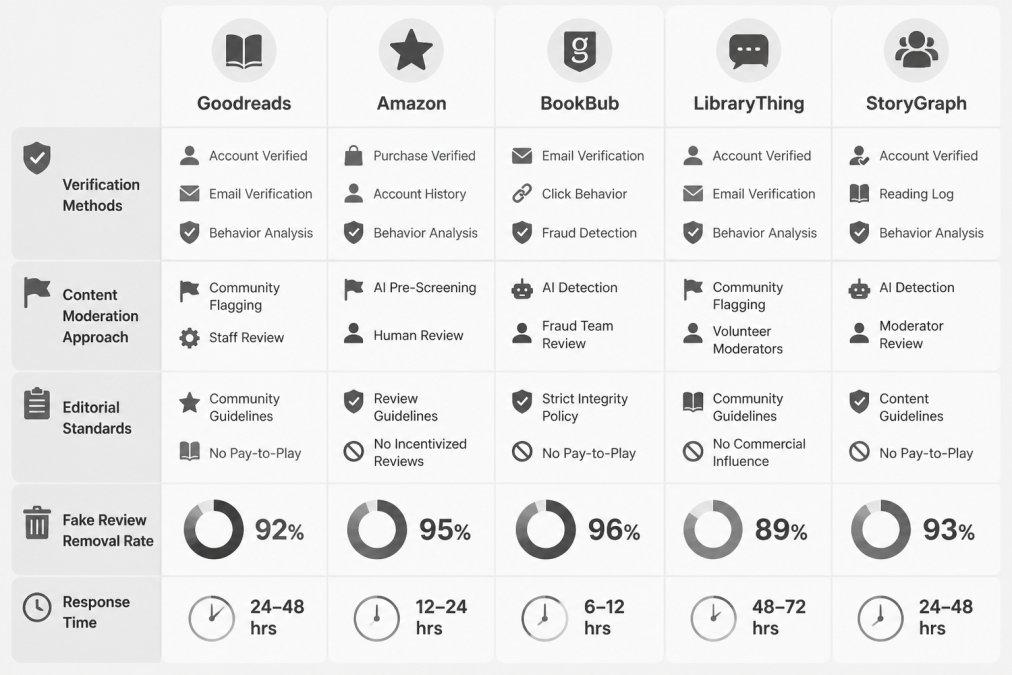
Editorial integrity and verification methods
Editorial integrity means a platform actively works to prevent fake reviews and maintains clear standards for what gets published. The best sites employ real people who verify purchases, check for suspicious patterns, and remove content that violates their guidelines.
Verification methods vary widely. Some platforms require proof of purchase before allowing a review. Others use algorithmic detection to flag suspicious activity, like multiple reviews from the same IP address or accounts created specifically to post reviews. The strongest approach combines both human oversight and automated systems.
Look for sites that publish their moderation policies openly. If a platform won't explain how it filters reviews, that's a red flag. Transparency about how reviews are verified builds trust with both readers and authors. Many platforms now disclose how many reviews they've removed for violating community standards, which shows they're actively protecting the integrity of their content.
Spotting fake reviews and AI-generated content
Fake reviews share common patterns. They often use generic language ("This book was amazing!"), lack specific details about the story or characters, and appear in clusters around the same time. AI-generated reviews tend to be polished but oddly impersonal, they read like they were written by someone who read a summary rather than the actual book.
Real reviewers mention specific scenes, quote passages, or describe how the book made them feel. They acknowledge flaws alongside strengths. A genuine review might say: "The pacing dragged in the middle section, but the ending redeemed the whole story." Fake reviews rarely offer this kind of nuance.
Several red flags suggest a review isn't authentic. Watch for reviews that focus entirely on the author's personal life rather than the book itself. Be skeptical of reviews that appear days after a book launches, especially if they're overwhelmingly positive.
Goodreads Alternatives for Book Reviews
Goodreads dominates the book review space, but it's far from perfect. The platform struggles with fake reviews, and many serious readers feel the community-driven approach lacks editorial oversight. If you're looking for alternatives, understanding what these platforms offer helps you find the right fit.
Why readers are seeking alternatives
Readers turn to alternatives for several reasons. Some want professional book reviews from critics with expertise in specific genres. Others seek communities where discussions go deeper than star ratings. Many are frustrated by Goodreads' inability to remove obviously fake reviews quickly enough.
Independent authors particularly value alternatives because they offer fairer visibility. On Goodreads, established authors get algorithmic boosts that newer writers struggle to match. Alternative platforms often level the playing field by emphasizing editorial curation or community-driven discovery rather than popularity metrics alone.
What these platforms offer instead
Different platforms take different approaches. Some focus on literary criticism and editorial standards. Others emphasize reader-generated content and community discussion. A few combine professional reviews with reader ratings, creating a hybrid model that appeals to both casual readers and serious book lovers.
Genre-specific platforms let readers find recommendations tailored to their interests. A romance reader might prefer a site dedicated to romance, where reviewers understand the genre's conventions and can evaluate books within that context. Literary fiction readers might seek platforms that publish longer, more analytical reviews.
Some alternatives offer better filtering and search tools. You can narrow results by reading level, content warnings, or specific themes. This level of customization helps readers find books that match their exact preferences rather than relying on broad popularity metrics.
Using a Book Review Aggregator to Find Consensus
A book review aggregator pulls ratings and reviews from multiple sources into one place, giving you a comprehensive view of what readers and critics think. Instead of checking five different sites, you see consensus data in seconds.
How aggregators surface honest opinions
Aggregators work by collecting data from established review sites and calculating weighted averages. If a book has 4.2 stars on Goodreads, 4.5 on another platform, and 3.8 on a third, the aggregator shows you all three scores alongside the average.
The real value emerges when you compare scores across platforms. If professional critics rate a book 3.5 stars but casual readers give it 4.5, that gap tells you something.
Quality aggregators also show which reviews came from verified purchases or professional sources. They might highlight reviews from readers with similar tastes to yours, or surface reviews that other readers found most helpful.
How to Get More Reviews for My Book Through Trusted Channels
Authors often struggle to get reviews without resorting to paid promotions or questionable tactics. The key is understanding the difference between reader-generated content that feels authentic and approaches that damage your credibility.
Reader-generated content vs. professional criticism
Reader-generated content comes from actual readers who bought and read your book. These reviews carry weight because they're unfiltered and honest. Readers who loved your book will say so. Readers who found problems will mention them. This authenticity matters far more than universally positive reviews.
Professional criticism serves a different purpose. Critics evaluate books against literary standards and genre conventions. A professional review might praise your work's originality while noting structural weaknesses. These reviews build credibility with serious readers and can open doors to media coverage.
The mistake many authors make is treating all reviews as equally valuable. A hundred genuine reader reviews from people who actually finished your book carries more weight than ten paid reviews from people who skimmed it. Platforms that verify purchases understand this distinction.
Building genuine engagement with your audience
Start by connecting with readers who already love your genre. Book clubs, reading circles, and community groups discuss books regularly.
Reach out directly to book bloggers and reviewers who cover your genre. Send them a copy with a personal note explaining why you think your book matches their interests. This approach respects their time and increases the chance they'll actually read your work.
Consider hosting virtual author events where readers can ask questions and discuss your book. These conversations often lead to reviews because readers feel connected to you and want to support your work. The engagement becomes genuine rather than transactional.
Timing matters too. Give readers time to finish your book before asking for reviews. A request that arrives three weeks after purchase suggests you've given people time to actually read it.
Trusted Book Review Websites: Genre-Specific Hubs
Generic review platforms work for general audiences, but readers serious about specific genres often prefer specialized communities. A mystery reader's needs differ from a romance reader's, and genre-specific sites understand these distinctions.
Why genre matters for honest recommendations
Genre conventions shape how readers evaluate books. A literary fiction reader might appreciate experimental structure that a mystery reader would find frustrating. A romance reader expects emotional depth and relationship development. A science fiction reader wants world-building consistency.
When reviewers understand genre conventions, their feedback becomes more useful.
Genre-specific sites also build communities of readers who share similar tastes. If you find reviewers whose opinions consistently align with yours, you can follow their reviews and recommendations. This personalized approach works better than algorithmic suggestions that often miss the mark.
These platforms also tend to have stricter moderation. A romance-specific site moderates for community standards that matter to romance readers. They remove reviews that dismiss the genre or treat romance readers dismissively.
How to Identify Trustworthy Literary Criticism
Not all criticism carries equal weight. Learning to distinguish between thoughtful analysis and uninformed opinion helps you make better reading decisions and understand which reviews matter most for your work.
Transparency and reviewer credibility signals
Reviewer credibility emerges from several signals. Does the reviewer have a history of covering books in your genre? Do their reviews show deep engagement with the text, or do they feel surface-level?
Look for reviewers who cite specific examples from the book.
Transparency about potential conflicts of interest matters too. If a reviewer received a free copy from the author, they should disclose it. If they have a personal relationship with the author, they should mention it.
Check whether the reviewer engages with criticism. Do they respond to comments? Do they clarify points when readers question their interpretation? Reviewers willing to defend their analysis show they've thought deeply about their opinions.
Consider the platform's editorial standards. Does the site employ professional editors who fact-check reviews? Do they require reviewers to meet certain standards before publishing? Do they remove reviews that violate community guidelines? These practices indicate a commitment to honest, credible criticism.
Conclusion: Building Your Book Discovery Strategy
Finding honest book reviews requires looking beyond single platforms and understanding how different sites approach editorial integrity, verification, and community moderation.
For authors building readership, the lesson is similar. Focus on generating authentic engagement with real readers rather than chasing inflated review counts. Connect with book clubs and reading communities. Reach out to reviewers whose work you respect.
At ReaderReach, we help independent authors connect with book clubs and reader communities through genre-matched outreach campaigns. We research communities most likely to appreciate your work and help you build lasting engagement that generates reviews, author visits, and event opportunities.
The future of book discovery depends on platforms and communities that prioritize honesty over hype. Whether you're a reader seeking your next great book or an author building your audience, choosing sources that value editorial integrity and reader authenticity makes all the difference.
Frequently Asked Questions
How can you tell whether a book review is honest?
Look for specific details about plot, characters, and writing style rather than vague praise or criticism. Honest reviews explain why a reader liked or disliked a book. Check if the reviewer has a history of balanced feedback across multiple titles. Verify they mention a verified purchase when available. Be cautious of reviews that focus only on personal grievances unrelated to the book's actual content or quality.
What are the best websites for finding trusted book reviews?
Trusted platforms prioritize editorial integrity through content moderation, verified reader badges, and transparent review policies. Look for sites that display reviewer history, allow readers to filter by verified purchases, and actively remove fake or AI-generated content. Genre-specific communities often provide deeper literary analysis than broad aggregators. The best choice depends on your reading preferences and whether you value professional criticism or community-driven recommendations.
How can I get more reviews for my book through honest review platforms?
Focus on platforms where your target readers naturally gather. Engage authentically with reader communities by participating in discussions and respecting editorial standards. Build relationships with book clubs and reading circles in your genre. Avoid paying for reviews or using artificial tactics, which damages credibility. Instead, connect with readers who genuinely match your book's genre and themes. Many platforms reward authors who participate transparently in the community conversation.
Are book review aggregators more reliable than individual reviews?
Aggregators provide valuable consensus by combining multiple perspectives, which helps balance individual bias. However, they're most useful when you examine the underlying reviews rather than just the overall rating. Individual reviews from verified readers with detailed feedback often offer richer insight into specific strengths and weaknesses. The most reliable approach combines aggregator ratings with reading several individual reviews from readers whose tastes align with yours.