
Last Updated: November 16, 2026
Quick Summary
You can find unbiased book recommendations by starting with your own reading history and matching new titles against the genres, pacing, and feelings you noted in a reading log. For reviews, trust sources where the reviewer has no financial stake in your decision to buy.
- Authors often name their influences in interviews and acknowledgements, giving you unpaid, specific read-alike suggestions.
- Read the one- and two-star reviews instead of trusting a five-star average, since they name a book's exact problems.
- An unbiased review comes from someone with no financial stake in your decision to buy.
- For nonfiction, check the author's credentials first, looking for named sources, a bibliography, and real background.
- Treat retail read-alike lists as a starting point, since they often mix paid placements with genuine matches.
Table of Contents
- Book Recommendations Based on What You've Read
- Book Recommendations Based on Authors I Like
- Unbiased Book Reviews: How to Spot a Trustworthy Source
- Frequently Asked Questions
Book Recommendations Based on What You've Read
The best ways to find unbiased book recommendations start with your own reading history, not a paid promotion. If you want to swap recommendations with real readers who share your tastes, see our article on online reading communities. A reading log records what you've read, with notes on genre, pacing, and how you felt at the end, match new titles against those patterns instead of bestseller lists. To build that habit, our guide on tracking your personal reading progress covers simple tools and a reading log template.
Book Recommendations Based on Authors I Like
Finding read-alikes for an author you love can lead to a good next book. Authors often name their influences in interviews and acknowledgements, unpaid, specific mentions a sponsored list never gives you. Read the acknowledgements page, check interviews for influence questions, scan award shortlists in the same genre, and ask a librarian for read-alike suggestions. The catch: read-alike lists on retail sites often mix paid placements with genuine matches, so treat them as a starting point, not a verdict. To organize the authors and series you already enjoy, our guide on organizing a digital book library walks through tagging and sorting.
Unbiased Book Reviews: How to Spot a Trustworthy Source
An unbiased book review is one where the reviewer has no financial stake in your decision to buy, that single test filters out most review content online. Reader reviews show how a book lands with real people, while professional criticism, such as the work covered in literary criticism and why it still matters, shows how it holds up under close reading. You want both, and you want to know which is which.
| Signal | Trustworthy | Treat With Caution |
|---|---|---|
| Disclosure | States affiliate links clearly | No disclosure at all |
| Reviewer stake | No financial tie to the book | Sells the book or gets paid per click |
| Specificity | Names exact strengths and flaws | Praises everything equally |
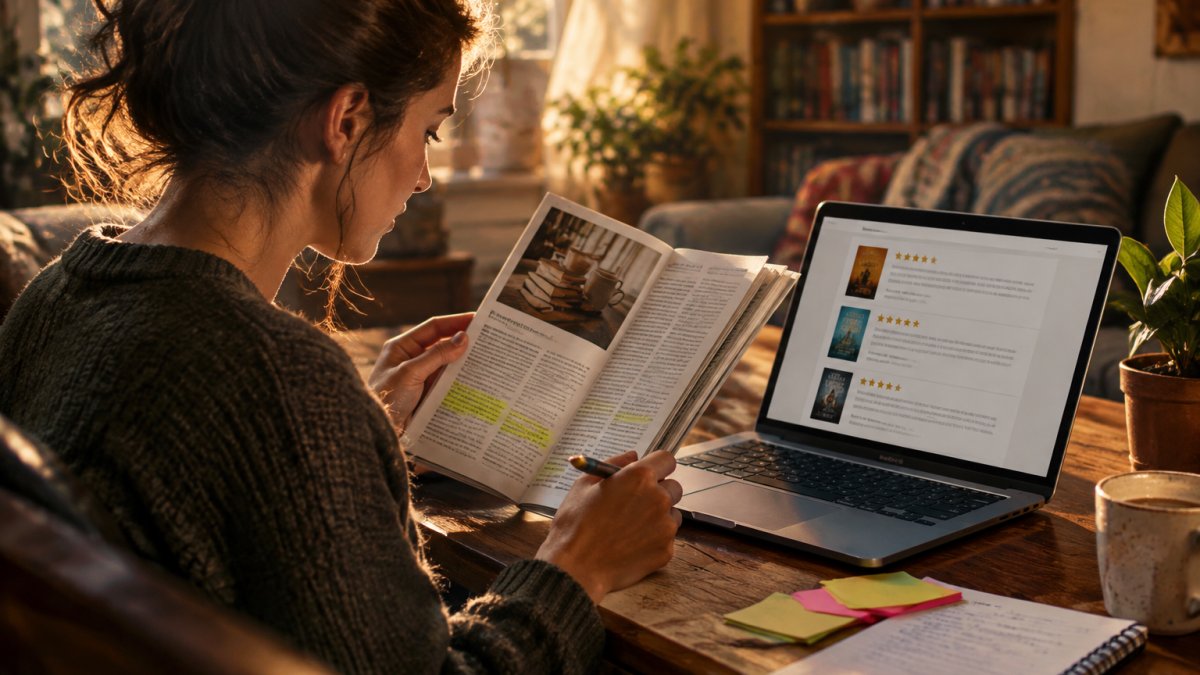
Watch out: the biggest mistake readers make is trusting a five-star average without reading the one- and two-star reviews, which usually name the exact problems a book has. For nonfiction, check the author's credentials before the reviews, look for named sources, a bibliography, and real background in the subject. For a shortlist of platforms where genuine reviews are easier to find, see our roundup of the best sites for honest book reviews.
Finding books you can trust takes a system, not luck. ReaderReach helps independent authors reach the readers most likely to love their work, through genre-matched outreach to book clubs, reading circles, libraries, and podcasts. Our team researches the right groups, manages daily follow-up, and tracks every reply in one Campaign Desk, so authors spend time writing instead of chasing contacts. Get started with ReaderReach and turn your next launch into real reader engagement.
Frequently Asked Questions
How can I tell whether a book recommendation is unbiased?
Check who is recommending the book and whether they gain anything from it. A recommendation is more trustworthy when the source discloses sponsorships, affiliate links, or free review copies. Look for specific criticism alongside praise, and see whether the reviewer mentions drawbacks. Cross-check the same title across a reader community, a professional review outlet, and a library guide. If all three describe the book in similar terms without identical phrasing, the recommendation is likely independent.
Are reader reviews more reliable than professional book reviews?
They answer different questions. Reader reviews show whether people finished the book and how it felt to read, which helps with fiction and mood-based picks. Professional reviews usually assess craft, structure, and factual accuracy, which matters more for nonfiction. Neither is automatically unbiased. Reader ratings can be inflated by review swaps, and professional outlets can carry their own editorial slant. Use reader reviews for engagement signals and professional reviews for claim-checking, then compare both before deciding.
How do I get book recommendations based on what I like?
Start with the last three books you finished and note what they shared: pacing, tone, structure, or subject. Search reader communities and library databases for those specific qualities rather than just the genre. Follow authors you enjoy and check who they cite as influences. A book recommendation quiz can help narrow the field, but treat its output as a starting list. Then verify each pick against at least one independent review source before you commit your reading time.
