
Last Updated: November 4, 2026
Quick Summary
A professional book sell sheet is a one-page document with six core elements: title and subtitle, author bio, genre and word count, a short hook, comparable titles, and contact details. Keep the hook to two or three sentences rather than a synopsis, since book clubs skim and want to know what the book is, who wrote it, and whether the author will show up.
- Include a title, subtitle, and genre up front so hosts see them immediately.
- Write a two- or three-sentence hook instead of turning the sheet into a summary.
- Keep the author bio to 50-75 words and add a headshot.
- List two or three comparable titles so hosts can picture the audience.
- Add a plain-text version, because many coordinators read pitches on their phones.
Table of Contents
- What to Include in a Book Sell Sheet
- Using a Book Sell Sheet Template to Save Time
- Book Sell Sheet Examples That Get Replies
- Frequently Asked Questions
What to Include in a Book Sell Sheet
A professional book sell sheet needs six things: title and subtitle, author bio, genre and word count, a short hook, comparable titles, and contact details. This one-page document gives book clubs, libraries, and podcast hosts everything they need to say yes.
- Title, subtitle, and genre up front
- A two- or three-sentence hook, not a synopsis
- Author bio of 50-75 words
- Word count and format
- Two or three comparable titles
- Cover image and headshot
- Contact details and author page link
- One line on what you can offer, like a Q&A or reading
The biggest mistake is turning the sell sheet into a summary. Book clubs skim. They want to know what the book is, who wrote it, and whether the author will show up.
Burying your contact details at the bottom of a dense page is the fastest way to lose a reply.
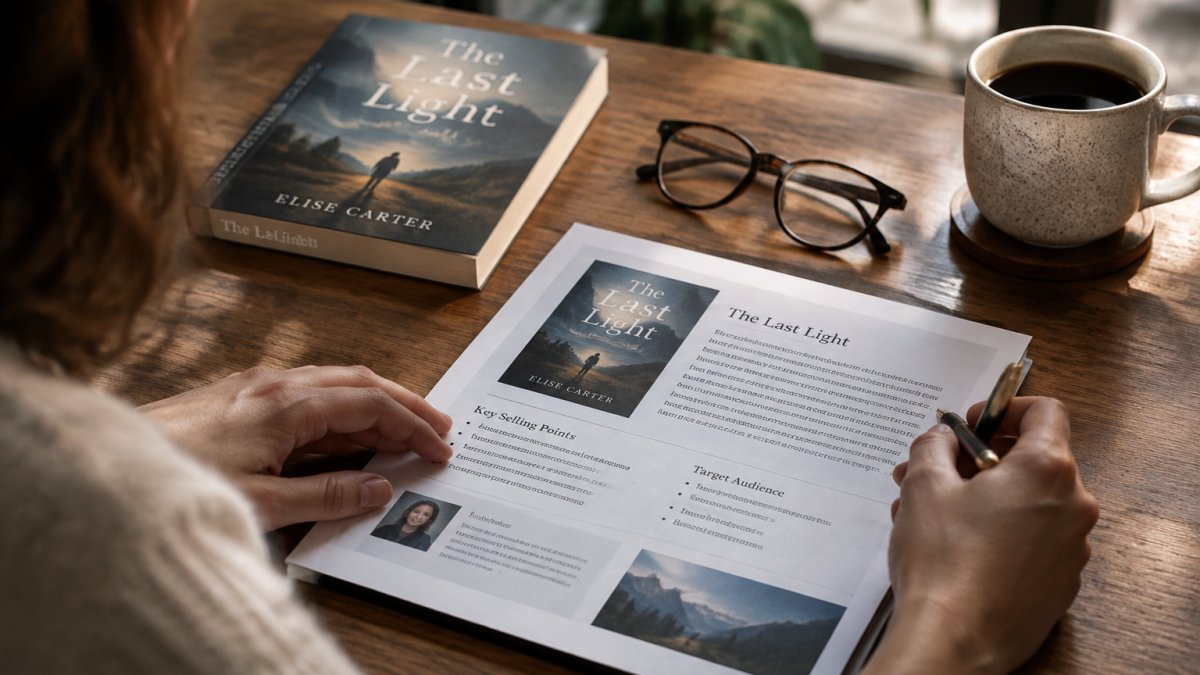
Here are the six core elements every professional sell sheet should carry, plus the details that make them work.
| Element | What to include | Note |
|---|---|---|
| Title and subtitle | Title, subtitle, and genre up front | Genre stated early |
| Hook | Two- or three-sentence hook | Not a synopsis |
| Author bio | Bio of 50-75 words | Plus headshot |
| Book specs | Word count and format | Cover image included |
| Comparable titles | Two or three comparable titles | Helps hosts picture the audience |
| Contact details | Contact details and author page link | Keep them easy to find |
| Author offer | One line on what you can offer | Like a Q&A or reading |
Using a Book Sell Sheet Template to Save Time
A book sell sheet template is a pre-built layout you fill in rather than design from scratch. It keeps your format consistent across every title and pitch.
- A single-page layout that prints cleanly
- Clear sections for hook, bio, and contact details
- Space for cover art and a headshot
- A plain-text version for emails
- Easy editing in a word processor or design tool
Keep the plain-text version: many book club coordinators read pitches on their phones, and a heavy PDF gets ignored. Our free tools for book clubs and reader outreach include templates you can adapt.
Get Your Book Club Checklist Free →
Book Sell Sheet Examples That Get Replies
The sell sheets that get replies make the next step obvious: they name the book, state the genre, and end with a simple ask.
Picture a mystery author pitching a library reading circle. Her sell sheet opens with the hook, lists two comparable titles, notes she can join by video or in person, and closes with "Reply to schedule." No wall of text.
- The hook-first sheet. Two sentences of premise, then the facts.
- The offer sheet. Leads with what the author will do, like a live Q&A or signed copies.
- The comparison sheet. Places the book beside well-known titles so hosts can picture the audience.
A sell sheet is only the first step. See how it fits a wider campaign in our guide to book promotion on a budget, or let our book marketing services for independent authors handle the pitching. For the full picture, see what to include in a digital press kit for authors.
Frequently Asked Questions
What is a book sell sheet?
A book sell sheet is a one-page document that introduces your book to bookstores, libraries, and book clubs. It puts the key details in one place: title, author, genre, a short hook, a brief synopsis, format and page count, ISBN, publication date, and contact information. Think of it as a resume for your book. When a book club organizer or buyer has seconds to decide whether to look closer, a clear sell sheet does that first job for you.
How long should a book sell sheet be?
Keep it to one page. Book club organizers, librarians, and bookstore staff skim dozens of these, so a single page forces you to lead with the strongest details. Use your cover image, a two-to-three sentence hook, a short synopsis, and a compact list of facts such as genre, format, page count, and ISBN. If you have reviews or awards, add one or two short lines. Anything longer gets set aside.
How do authors use a sell sheet to reach book clubs?
A sell sheet gives a book club organizer everything they need to say yes in one glance: what the book is about, who it suits, and how to reach you. Pair it with a short personal email that names the group's genre focus and explains why your title fits their next read. Include a note about whether you are available for a virtual or in-person visit. ReaderReach builds genre-matched outreach around exactly this kind of sell sheet, so each group gets a relevant, professional pitch.
Most authors build a decent sell sheet and then stall, because the hard part is not the page. It is finding the right book clubs and following up until someone replies. That is exactly what ReaderReach does: genre-matched contact research, a dedicated outreach identity for you, and a Campaign Desk that tracks replies and follow-up tasks so nothing goes cold. Get started with ReaderReach and turn one good page into real reader conversations.
