Table of Contents
- What Book Promotion Actually Costs for Indie Authors
- Book Promotion on a Budget: DIY and Low-Cost Tactics
- Book Advertising for Self-Published Authors: Paid Options Explained
- Building a Book Launch Marketing Plan That Fits Your Budget
- Book Club Outreach for Authors: When It Makes Sense to Invest
- Measuring ROI: Does Your Book Promotion Spending Actually Work?
- Frequently Asked Questions
Last Updated: October 20, 2026
What Book Promotion Actually Costs for Indie Authors
Book promotion costs indie authors confusion about where money actually goes, since it's one of those things every author knows they need to do. When you're self-publishing, you're making decisions about your own marketing budget without a publishing house behind you. That means understanding what promotion actually costs, and more importantly, which costs make sense for YOUR book.
At ReaderReach, we work with indie authors every day who are figuring out exactly this puzzle. Some spend on paid ads with little return. Others spend almost nothing and still build meaningful readership. The difference isn't usually about the total amount spent, it's about where that money goes and whether it reaches the right readers.
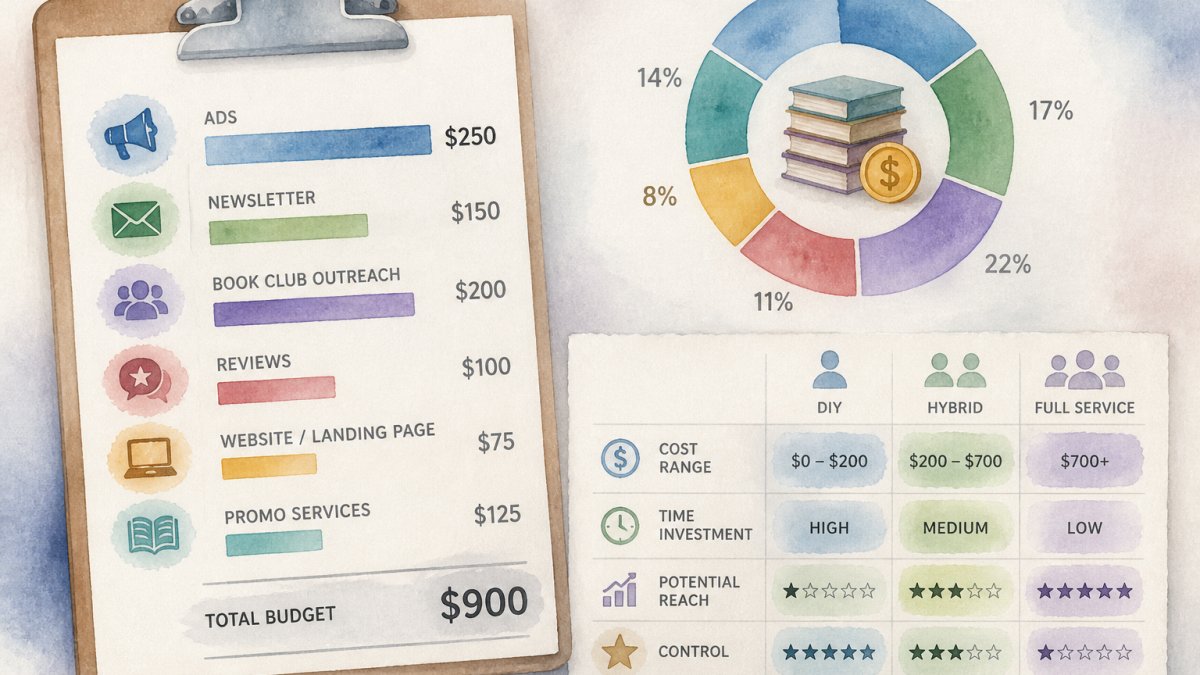
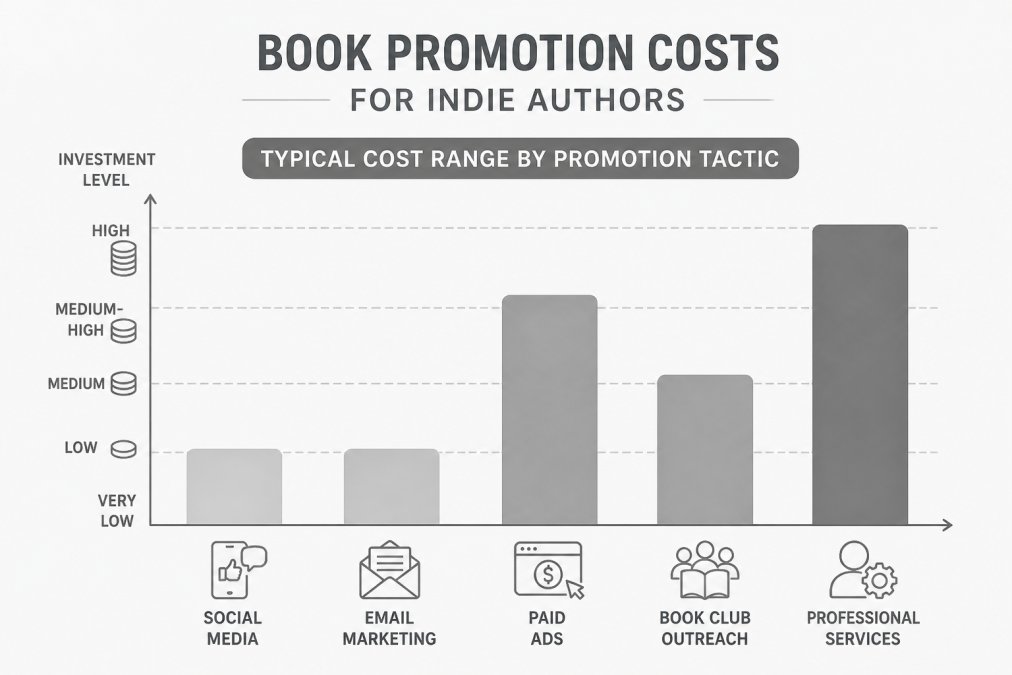
How much book promotion costs indie authors varies wildly depending on your approach. A grassroots social media campaign might cost you time and nothing else. A professional book launch marketing plan with paid advertising, email outreach, and book club placements could vary in cost. The real question isn't "How much should I spend?" but rather "What's the smartest way to spend what I have?"
Let's break down what book promotion on a budget actually looks like, what paid options exist, and how to measure whether your spending is working.
Book Promotion on a Budget: DIY and Low-Cost Tactics
The good news: you don't need a massive budget to get your book in front of readers. Many indie authors build genuine momentum through approaches that cost little to nothing upfront.
Social media promotion is the classic low-cost starting point. Creating posts about your book, sharing excerpts, and engaging with reader communities takes time but minimal money. If you're already on social platforms, you're essentially adding book content to what you're already doing. This approach works best when you're consistent, sporadic posts tend to disappear into the noise.
Email marketing to your existing network is another near-free tactic. If you already have an email list from previous work, writing, or personal connections, you have an audience primed to hear about your book. Building an email list takes time, but the actual sending costs nothing if you use free tiers from platforms like Mailchimp or Brevo for small lists.
Book club outreach is where many indie authors find their most engaged readers, and it's where ReaderReach specializes. Reaching out to book clubs directly, researching which ones match your genre, crafting personalized messages, following up with replies, costs you time but not money. This is the DIY version of what professional outreach services handle at scale. Some authors do this themselves and find success; others prefer to have it managed professionally so they can focus on writing.
Library submissions and local bookstore connections are free to pursue. Librarians and booksellers want good books for their communities. A thoughtful pitch about your book costs nothing to send, and some libraries and independent bookstores will stock or promote indie titles.
Content marketing, writing blog posts, guest articles, or free resources related to your book's topic, builds authority and can drive organic traffic. This takes time but no money if you're writing and publishing on platforms you already use.
The pattern here is clear: low-cost promotion is very doable, but it demands your time and consistency. It works best when you have months to build momentum before and after launch.
Book Advertising for Self-Published Authors: Paid Options Explained
When you're ready to invest money in promotion, paid advertising is where most indie authors put their budget. The landscape here is broad, and understanding your options matters.
Paid social media advertising on Facebook, Instagram, and TikTok lets you target readers by interest, age, and behavior. You set a daily budget and pay per click or per thousand impressions. Many indie authors start with $5-10 per day to test whether ads reach their target audience, then scale up if results look promising. The advantage is control and flexibility; the challenge is that ad performance varies wildly depending on your book's genre, cover, and audience targeting.
Amazon advertising is a major channel for indie authors because your potential readers are already there. Amazon Ads lets you run sponsored product ads on search results and book detail pages. You bid on keywords and pay when someone clicks your ad. This tends to work well for genres where readers actively search (mystery, romance, sci-fi), less well for niche or literary fiction where search volume is lower.
BookBaby, Draft2Digital, and similar platforms offer advertising services bundled with distribution. These services handle placement across retailers and can include promotional support. They typically charge flat fees or take a commission on sales.
Goodreads advertising reaches readers actively looking for their next book. Ads appear on book pages and in user feeds. This is a smaller budget channel but often delivers engaged readers who are already in a reading mindset.
Podcast advertising and book review sites like Bookstagram influencers or book bloggers offer another paid route. Costs vary widely, a podcast ad might run $50-200 per episode, while a featured review on a popular book site could be $100-500. These work best when the audience genuinely matches your book's genre.
The reality with paid advertising: it requires testing. You'll spend some money figuring out what works for your book before you find a profitable channel. Budget accordingly.
Building a Book Launch Marketing Plan That Fits Your Budget
A smart book launch marketing plan doesn't require unlimited spending. It requires strategy.
Start by defining your goal. Are you trying to hit bestseller lists? Build a loyal reader base? Generate reviews? Get book club placements? Your goal shapes where you spend money.
Three months before launch, begin building your audience. This is where email list growth and social media engagement happen. These activities are mostly free and set the foundation for launch momentum.
One month before launch, ramp up your promotion efforts. If you're using paid ads, this is when you start testing. If you're pursuing book club outreach, this is when applications and pitches go out. ReaderReach typically recommends this timing because book clubs plan their selections weeks in advance.
Launch week, coordinate your efforts. Social media posts go out. Emails to your list get sent. Paid ads run. Any partnerships or reviews you've arranged go live. This is when you want visibility concentrated.
Post-launch, sustain momentum for 4-8 weeks. Many indie authors see their best sales in the weeks after launch, not during launch itself. Continuing your promotion efforts, even at a lower level, keeps your book visible.
The budget breakdown depends on your choices:
| Promotion Tactic | Time Investment | Money Investment | Best Timeline |
|---|---|---|---|
| Social media posts | High | Low/None | Ongoing, 3+ months before launch |
| Email to existing list | Medium | Low/None | Pre-launch and launch week |
| Paid social ads | Low | Medium | 1 month before through 4 weeks after |
| Book club outreach | High (DIY) or Low (managed) | Low (DIY) or Medium (managed service) | 6-8 weeks before launch |
| Amazon ads | Low | Medium | Launch week through 8 weeks after |
| Goodreads ads | Low | Low | Launch week and beyond |
Most indie authors find that mixing paid and unpaid tactics works better than relying on one approach. A combination of social media (free), email to your list (free), and one paid channel (ads or services) gives you reach across different reader touchpoints.
Book Club Outreach for Authors: When It Makes Sense to Invest
Book club outreach deserves its own attention because it's where many indie authors find their most engaged readers, and where the decision to invest in professional help often makes sense.
Book clubs are powerful for authors. Members read your entire book, discuss it deeply, and often buy copies for friends or recommend it widely. A single book club placement can generate dozens of engaged readers, not just sales.
The DIY route works if you have time. You research book clubs in your genre, craft personalized pitches, follow up on replies, and coordinate author visits or Q&As. This takes weeks of effort but costs nothing. Many indie authors do this themselves, especially for their first book.
Professional book club outreach services like ReaderReach handle the research and outreach at scale. Instead of you spending 10-15 hours researching and emailing clubs, a managed service does it, tracks replies, and coordinates follow-ups. This frees you to write your next book while your current one builds readership through book club placements.
When does professional outreach make sense? If you have limited time, if you've tried DIY outreach without success, or if your book has strong commercial potential and you want to maximize its reach, investing in managed outreach often pays off through the reader relationships and reviews that result.
The key insight: book club readers aren't just sales, they're the foundation of lasting readership. They talk about your book. They leave reviews. They buy your next book. That's why many authors consider book club outreach one of the smartest places to invest promotion dollars.
Measuring ROI: Does Your Book Promotion Spending Actually Work?
Spending money on promotion means nothing if you can't tell whether it's working. This is where many indie authors get stuck.
Start by tracking what you're actually measuring. Sales are obvious, but they're not the only metric that matters. Reviews, reader engagement, email list growth, and book club placements all indicate that your promotion is working, even if they don't immediately translate to sales.
For paid advertising, track your cost per click and your conversion rate. If you're spending $100 on ads and getting 50 clicks but no sales, something's wrong, either your book's cover or description isn't converting clicks to purchases, or you're targeting the wrong audience. Adjust and test again.
For email promotion, track open rates and click-through rates. If your email to your list has a 20% open rate but almost no clicks to your book's sales page, your message isn't compelling. Revise and try again.
For book club outreach, track reply rates and placements. If you're reaching out to 50 book clubs and getting no replies, your pitch needs work or your targeting is off.
For social media, track engagement and traffic. Are people clicking through to your book's sales page? Are they following you? Engagement without traffic suggests your content isn't converting interest into action.
The uncomfortable truth: most indie authors don't see immediate ROI on promotion spending. Books build momentum over time. A book club placement in month three might generate sales in months four through twelve.
This is why tracking matters. You need to see the full picture over time, not just immediate results.
Book promotion for indie authors doesn't have to be expensive, but it does require intention.
The authors who see the best results aren't necessarily the ones who spend the most money, they're the ones who spend strategically and measure what works. Start with the tactics that fit your budget and time, test them, track the results, and adjust.
Ready to build real reader relationships? ReaderReach helps indie authors connect with book clubs and reader communities through genre-matched outreach. Get started with a managed book club outreach campaign and turn your book into lasting reader engagement.
Frequently Asked Questions
How much should an indie author budget for book promotion?
Budget depends on your book type, launch timeline, and goals. New indie authors often start with minimal spend (under $500) using social media and email, then scale up if sales justify it. Established authors preparing a major launch may invest more in paid advertising and professional outreach. The key is testing small amounts first to see what drives actual sales for your genre and audience before committing larger amounts.
Can you promote a self-published book without paid advertising?
Yes. Many indie authors build readership through organic tactics: social media posts, email newsletters to existing readers, book club outreach, podcast interviews, and reader communities. These take time but cost little beyond your effort. Paid advertising amplifies reach faster, but organic promotion alone can work, especially if you're patient and consistent with your audience engagement.
What does book promotion typically include?
Book promotion covers multiple channels: paid ads on platforms targeting readers, social media content and engagement, email campaigns to your mailing list, book club and library outreach, podcast and interview placements, content marketing (blog posts, articles), and reader community participation. Some authors handle these themselves; others hire services to manage outreach and follow-ups, which adds to overall promotion costs.
How do I measure whether a book promotion campaign is working?
Track sales, reviews, and engagement against your spending. Monitor click-through rates from ads, conversion rates (clicks to purchases), email open rates, and social media engagement. Compare sales during and after campaign periods. Calculate return on investment by dividing revenue gained against promotion costs spent. If you're not seeing measurable results after testing, adjust your approach or audience targeting before scaling spending.